 By Patricia Jones
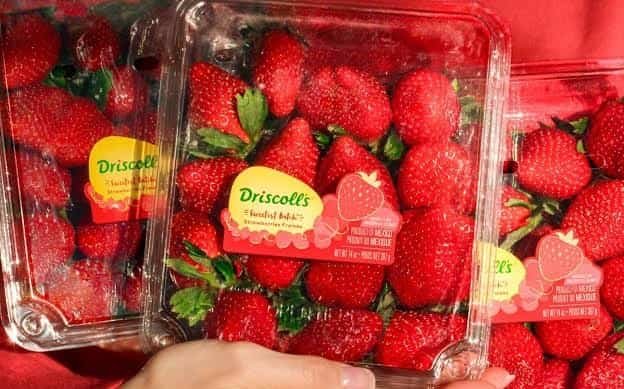
 The Driscoll strawberries lawsuit accuses Driscoll’s, Inc. of misleading consumers about the safety and environmental qualities of its conventional strawberries. Six shoppers filed the proposed class action on June 26, 2026, in the U.S. District Court for the Northern District of California.
The case is titled Berlinger et al. v. Driscoll’s Inc. and has been assigned case number 5:26-cv-06444. The plaintiffs are Robert Berlinger, Robert Duxler, Francesca Hammersmith, Maria Khangi, Phylicia Washington and Bianca Weins. They seek to represent consumers from Illinois, New York, New Jersey and Massachusetts.
The allegations have not been proved, and the court has not decided whether Driscoll’s strawberries contain unlawful pesticide levels or whether the company misled consumers.
What Does the Driscoll Strawberries Lawsuit Allege?
The lawsuit concerns Driscoll’s conventional strawberries. It does not challenge the company’s separately marketed organic strawberry products.
According to the complaint, Driscoll’s promotes its strawberries through statements about food safety, quality controls and environmentally responsible farming. The lawsuit points to the company’s “Only the Finest Berries” slogan and statements that its products are subject to rigorous food-safety and quality standards.
The plaintiffs claim these representations created the impression that the strawberries were cleaner, safer and produced under stronger environmental standards than ordinary fruit. They allege that Driscoll’s failed to disclose the possible presence or use of fluorinated pesticide compounds classified by the plaintiffs as PFAS-related substances.
PFAS is a broad name for per- and polyfluoroalkyl substances. They are often called “forever chemicals” because some remain in the environment for long periods without breaking down easily.
Testing Cited in the Complaint
The lawsuit relies heavily on laboratory testing publicised in May 2026 by consumer advocacy website Mamavation. The complaint says the testing detected residues from 12 pesticides on a sample of Driscoll’s conventional strawberries.
Eight of those pesticides were classified in the complaint as PFAS-related or “forever pesticides.” They included flonicamid, fludioxonil, flupyradifurone, fluxapyroxad, indoxacarb, novaluron and tetraconazole, along with a substance identified as TFNG. Four additional pesticide residues were also reported.
The testing reportedly involved one container of conventional Driscoll’s strawberries and one container of its organic strawberries purchased in California. The conventional sample reportedly showed pesticide residues, while the organic sample did not test positive for the pesticides included in the analysis.
However, the results cited in the lawsuit do not establish that every package of Driscoll’s strawberries contains the same substances or concentrations.
Plaintiffs Are Not Claiming Personal Injuries
The six consumers are not alleging that eating the strawberries caused them cancer, illness or another physical injury. They are also not claiming in this case that the tested strawberries exceeded applicable U.S. pesticide-residue limits.
Instead, the lawsuit is based mainly on an economic-injury argument. The plaintiffs claim they paid a premium price because they relied on Driscoll’s food-safety, quality and sustainability marketing.
They say they would not have purchased the strawberries, or would have paid less, had the packaging and advertising disclosed the alleged use or presence of PFAS-related pesticide compounds.
What Laws Does the Case Involve?
The proposed class action brings claims under consumer-protection laws in four states.
The Illinois plaintiffs allege violations of the Illinois Consumer Fraud and Deceptive Business Practices Act. The New York plaintiffs rely on state laws covering deceptive practices and false advertising.
The complaint also brings claims under the New Jersey Consumer Fraud Act and Massachusetts General Laws Chapter 93A, which prohibits unfair or deceptive commercial practices.
Before the consumers can proceed on behalf of larger groups, the judge must decide whether the proposed classes satisfy federal class-action requirements. No class has yet been certified.
What Are the Plaintiffs Seeking?
The plaintiffs want monetary compensation, restitution and the return of profits allegedly obtained through misleading marketing. The complaint also requests punitive damages where state law allows them, along with legal fees and court costs.
They are asking for an injunction preventing Driscoll’s from selling the challenged strawberries unless the alleged PFAS-related compounds are removed or properly disclosed through packaging and marketing.
The lawsuit also asks the court to require a corrective advertising campaign and prevent Driscoll’s from presenting the products as beneficial to consumer health or the environment in a misleading manner. No specific total damages amount has been stated.
How Has Driscoll’s Responded?
Driscoll’s has rejected the allegations as being without merit. The company says food safety, quality and integrity are central to its operations and that it maintains strong safety and regulatory-compliance programmes.
Driscoll’s also says it communicates responsibly about its products and growing practices. The company has not admitted that its marketing was misleading or that its strawberries were unsafe.
Is There a Driscoll’s Settlement or Claim Form?
No settlement has been reached, and there is currently no claim form or payment programme for strawberry purchasers.
The Driscoll strawberries lawsuit remains at an early stage. Driscoll’s may seek dismissal, challenge the testing and dispute whether its advertisements would lead a reasonable buyer to expect strawberries completely free from the disputed pesticide residues.
The court must also determine whether the named plaintiffs have valid claims and whether the case may proceed as a class action. Until those questions are resolved, the allegations about PFAS-related compounds and misleading marketing remain disputed rather than established findings.