 By Bob Paterson
The Samsung foldable phone patent lawsuit concerns technology that helps a phone change shape without losing its usefulness: flexible displays, folding mechanisms and interfaces that adapt as the device opens or closes. Lepton Computing LLC alleges that Samsung used its patented inventions in Galaxy foldable devices without permission. It is seeking financial relief and a court order restricting allegedly infringing products in the United States.
The dispute is real, but headlines about a possible ban need context. Court docket records confirm that Lepton sued Samsung in April 2026 and that proceedings continued into September. They do not establish that Samsung stole the technology, that Lepton has won, or that a sales ban has been imposed.
Who Filed the Samsung Foldable Phone Patent Lawsuit?
Lepton Computing LLC filed its complaint on April 23, 2026, against Samsung Electronics Co., Ltd. and Samsung Electronics America, Inc. The case is before Judge Rodney Gilstrap in the U.S. District Court for the Eastern District of Texas, under case number 2:26-cv-00338.
The docket identifies a patent-infringement action under 35 U.S.C. § 271 and records Lepton’s jury demand. Some coverage uses April 24, when the case-assignment notice appeared. The complaint entry itself is dated April 23.
This is a dispute between a patent claimant and the accused companies. It is not a consumer class action seeking refunds for cracked screens, hinge failures or warranty complaints.
What Does Lepton Allege Samsung Used?
Bloomberg Law reported that Lepton’s allegations concern flexible-display devices, hinge mechanisms and user-interface systems. Other reporting identifies nine asserted patents and describes claims involving display protection, hardware arrangements, sensors, multitasking and app continuity when a device is folded or unfolded.
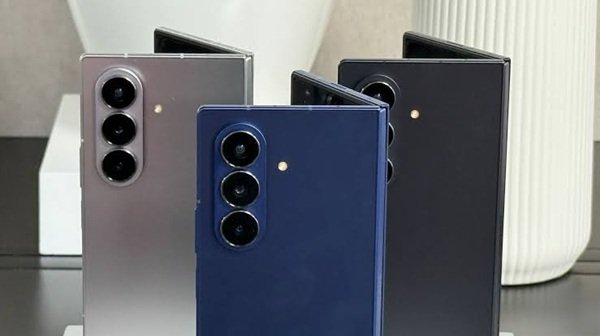
The accused product families include Galaxy Z Fold, Galaxy Z Flip and Galaxy Z TriFold devices. Reporting by 9to5Google identifies the Z Fold3 and Z Flip3 generations and later foldables in the allegations. Readers should not interpret broad references to Samsung’s foldable lineup as a finding that every model infringes every patent.
The distinction matters because patent infringement turns on specific claims—the numbered language defining a patent’s protection—and how the accused product operates. Two devices can share the general idea of a folding screen without necessarily practicing the same patented invention.
Why Lepton’s Development History Matters
Lepton presents itself as an early developer of foldable computing technology. Bloomberg Law identifies founder Stephen Delaporte, while technology reporting describes Lepton’s claimed research beginning in 2008 and a prototype called Lepton Flex. These statements explain Lepton’s account of its work; they are not judicial findings that it invented every feature of modern foldable phones.
One relevant patent record illustrates why the timeline requires care. U.S. Patent No. 11,048,300, titled “Flexible and rigid touch screen display computing devices,” names Stephen E. Delaporte as inventor and Lepton Computing as assignee. It was granted on June 29, 2021, and its record identifies a claimed priority chain reaching August 10, 2010.
Consequently, comparing a 2021 grant date with an earlier Samsung product launch cannot settle the dispute. A patent’s grant date and the earlier filing date to which particular claims may be entitled are different. Whether the earlier disclosures support those claims still requires analysis. The dates alone establish neither infringement nor invalidity.
What Has Samsung Done in Court?
The available docket shows a specific challenge to Lepton’s willful-infringement allegations:
- August 18, 2026: Samsung filed a motion to dismiss the willful-infringement claims.
- September 1, 2026: Lepton filed its opposition.
- September 9, 2026: Samsung filed its reply.
- September 30, 2026: The court held a scheduling conference and provided claim-construction and jury-selection or trial dates.
The public conference entry reviewed does not disclose those future dates. Nor does the motion’s title establish that Samsung sought dismissal of every infringement claim. A request concerning willfulness must not be reported as a decision ending the entire case.
The underlying briefs were not independently reviewed for this article, so specific arguments should not be attributed to Samsung beyond what the verified docket establishes.
Could the Lawsuit Lead to a Sales Ban?
Lepton reportedly seeks damages and a permanent injunction against allegedly infringing Samsung foldables. Requesting an injunction does not make it effective, and even a successful infringement claim does not automatically produce one.
In eBay Inc. v. MercExchange, the U.S. Supreme Court held that patent injunctions require the traditional four-factor assessment. Courts consider irreparable injury, whether money adequately compensates the claimant, the balance of hardships and the public interest.
Accordingly, predicting either an inevitable ban or an impossible ban goes beyond the available evidence. The outcome would depend on the patent claims, infringement findings and the separate requirements for injunctive relief.
Samsung Foldable Patent Lawsuit Status in 2026
As reviewed on October 14, 2026, the public docket displayed an update date of October 8 and recorded proceedings through the September 30 scheduling conference. Those entries establish litigation activity beyond the initial filing.
No final infringement judgment, verified settlement, damages award or injunction was identified in the reviewed material. The available listing also did not establish a ruling on Samsung’s willfulness motion. These limits matter: a filed motion, an opposition brief and a scheduling conference do not decide which party is right.
Frequently Asked Questions
Q. Can Lepton enforce patents without selling its own smartphones?
Potentially, yes. Patent ownership does not depend on successfully launching a competing consumer product. The Supreme Court has expressly rejected a blanket rule denying injunctions to patent holders that prefer licensing their inventions. Lepton must still establish enforceable rights and infringement; its commercial footprint alone does not decide the merits.
Q. Could Galaxy owners receive compensation if Lepton wins?
This case does not establish a consumer compensation program. Lepton is asserting its own patent rights against Samsung, so any damages awarded on those claims would not automatically become refunds for phone purchasers. A customer’s separate warranty or product-defect complaint would raise different issues.
Q. Would a U.S. ruling automatically ban Samsung foldables in India?
No. U.S. patent rights are territorial, and this case concerns alleged infringement of those rights. A U.S. sales restriction would not automatically become an Indian sales ban. Any effect on products sold in India would require separate legal or commercial developments, rather than following automatically from this complaint.