 By Patricia Jones
No. Simply talking, singing or making ordinary sounds while observing a dolphin is not automatically illegal in the United States. However, deliberately trying to attract, touch, feed, chase or obtain a reaction from a wild dolphin can become illegal harassment under federal law.
The legal issue is not whether a human and dolphin appear to “communicate.” The issue is whether the person’s actions disturb, injure or alter the natural behaviour of a wild marine mammal.
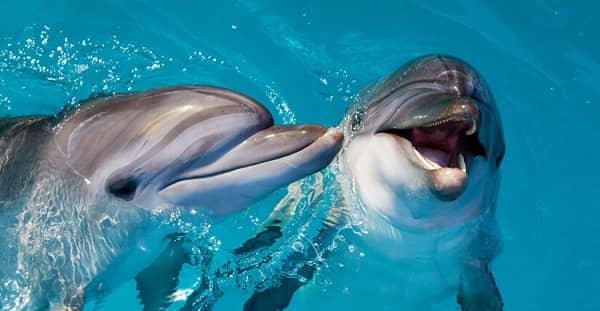
What Law Protects Dolphins?
Wild dolphins in U.S. waters are protected mainly by the federal Marine Mammal Protection Act, commonly called the MMPA.
The law generally prohibits the unauthorized “taking” of a marine mammal. Taking includes hunting, capturing, killing or harassing a marine mammal, as well as attempting to do any of those things.
Therefore, a person does not have to physically injure or capture a dolphin to violate the law. Conduct that seriously disturbs the animal may be enough.
Is Talking to a Dolphin Illegal?
Merely speaking, singing or calling out from a safe distance is not a crime by itself.
For example, a person watching dolphins from a beach or boat does not normally violate federal law simply by saying something to them. Recording dolphin sounds from a responsible distance is also not automatically prohibited.
However, someone who repeatedly whistles, plays sounds, splashes, bangs on a boat or uses another method specifically to make dolphins approach or react may create a legal problem if the activity disturbs their natural behaviour.
NOAA Fisheries states that people should not attempt to interact with wild dolphins or deliberately elicit a reaction from them.
When Can Communication Become Harassment?
Federal law recognizes two general levels of marine-mammal harassment.
Level A harassment involves conduct with the potential to injure a marine mammal or marine-mammal population.
Level B harassment involves conduct with the potential to disturb a marine mammal by disrupting activities such as breathing, migration, nursing, breeding, feeding or sheltering.
This means an activity presented as “communication” could be illegal when it causes dolphins to:
- Stop feeding or resting
- Separate from their calves
- Change direction to avoid a boat or swimmer
- Abandon an area
- Become dependent on humans
- Approach boats in expectation of food
- Display signs of fear, agitation or aggression
A person’s intention to be friendly does not necessarily prevent the conduct from being treated as harassment.
Is It Illegal to Feed Dolphins?
Yes. Feeding or attempting to feed any wild marine mammal is prohibited.
The federal definition of feeding includes offering or attempting to give food or even non-food objects to a wild marine mammal. It can also include operating a boat or providing another platform from which illegal feeding occurs.
Feeding changes dolphin behaviour. Dolphins may begin approaching boats, stealing bait or depending on people instead of hunting naturally. NOAA warns that fed dolphins can become aggressive, suffer boat-propeller injuries or become entangled in fishing equipment.
Throwing a fish toward a dolphin as a way of attracting it or encouraging interaction is therefore not lawful communication.
Is Swimming With Wild Dolphins Illegal?
Swimming near a dolphin is not governed by one identical distance rule everywhere in the country. However, NOAA does not support attempts to swim with, pet, touch or closely interact with wild dolphins because these activities can constitute harassment.
NOAA generally recommends observing wild dolphins from at least 50 yards, or 150 feet, away. It also recommends avoiding loud noises, sudden movements, mother-and-calf separation and viewing sessions lasting longer than about 30 minutes.
This 50-yard recommendation is a general viewing guideline in many locations, not necessarily a universal criminal distance limit for every dolphin species. Some species and areas have stricter enforceable regulations.
Special Rule for Hawaiian Spinner Dolphins
Federal regulations specifically prohibit approaching, swimming with or remaining within 50 yards of Hawaiian spinner dolphins in covered waters around the main Hawaiian Islands.
A person also cannot position a boat, swimmer or other object in the dolphins’ path so that the animals are forced to approach within 50 yards.
When a spinner dolphin unexpectedly approaches a person, the regulations provide an exception if the person does not attempt to engage or pursue it and immediately takes reasonable steps to move away.
Therefore, trying to “communicate” by swimming toward spinner dolphins in Hawaii or positioning yourself where they must pass close by can directly violate a specific federal distance rule.
What If a Dolphin Approaches You?
A person is not automatically violating the law merely because a wild dolphin voluntarily approaches a boat, paddleboard or swimmer.
The safest response is to remain calm, avoid touching or feeding it and allow the dolphin to leave. Do not chase it, surround it, block its path or encourage repeated interaction.
If operating a boat, avoid abrupt turns or speed changes that could injure the animal. NOAA advises people to move away cautiously when marine mammals show signs of stress and not to swim with or touch them even when the animals approach voluntarily.
Can You Use Recorded Dolphin Sounds?
Playing recorded whistles or other underwater sounds is not automatically illegal in every situation. However, sound can disturb marine mammals.
If recorded calls, underwater speakers, sonar-like equipment or loud noises cause dolphins to interrupt feeding, resting, nursing, migration or other natural behaviour, the activity could constitute Level B harassment.
Scientific researchers and government projects that intentionally expose marine mammals to sound may need a federal permit or incidental-take authorization. The MMPA contains procedures allowing certain research and other activities only under approved conditions.
A tourist or boat operator should therefore not use underwater sound equipment to attract wild dolphins without understanding the legal and environmental consequences.
What About Dolphins in Aquariums?
Communicating with or responding to a dolphin during an authorized aquarium or marine-park programme is not automatically illegal.
Captive facilities operate under federal animal-care, display and permit requirements. Visitors must follow the facility’s instructions and should not touch, feed or signal animals unless the interaction is specifically supervised and authorized.
The wild-dolphin harassment rules are particularly important because wild animals can leave, hunt, migrate and care for young without human interference.
What Are the Penalties?
A violation of the Marine Mammal Protection Act can lead to substantial civil penalties. The inflation-adjusted maximum civil penalty listed for an MMPA violation is currently $36,498 per violation. Each unlawful taking can be treated as a separate offence.
A knowing criminal violation can also result in a fine and imprisonment for up to one year under the federal statute. Equipment, vessels or property connected with an offence may also face seizure or forfeiture in qualifying cases.
How Should Dolphins Be Observed Safely?
People should observe wild dolphins quietly from a distance and allow the animals to determine their own movements.
Responsible viewing generally means:
- Do not feed or offer objects
- Do not chase or follow closely
- Do not swim toward them
- Do not touch or attempt to ride them
- Do not surround them with boats
- Do not separate mothers from calves
- Avoid sudden movement and excessive noise
- Leave the area if the dolphins appear disturbed
Suspected feeding or harassment can be reported to the NOAA Fisheries Enforcement Hotline at 800-853-1964. Reports may be made anonymously.
Therefore, ordinary speech directed toward a dolphin from a safe distance is not illegal. The conduct can become illegal when “communication” is really an attempt to attract, feed, touch, chase or disturb a wild dolphin’s natural behaviour.