 By Bob Paterson
The words, cheers and sound effects heard in a children’s cartoon became crucial evidence in a global intellectual-property dispute. Owners of Peppa Pig argued that Vietnamese animation studio SConnect reused protected Peppa Pig audio in Wolfoo videos distributed on YouTube and other platforms. In June 2026, England’s High Court ruled in their favor on that copyright claim. The decision mattered far beyond whether two cartoons looked similar: it tested the use of short recorded sounds, the evidence needed to prove copying and the reach of orders affecting videos shown worldwide.
How the Copyright Battle Began
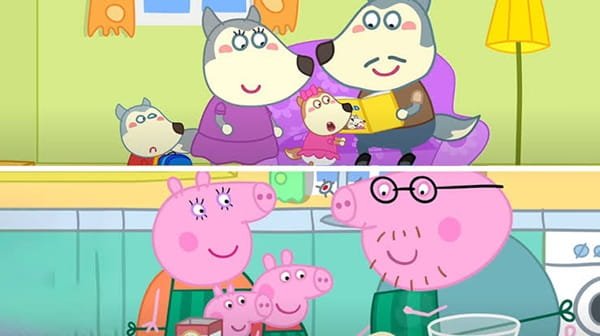
The dispute involves Hasbro Consumer Products Licensing and related Peppa Pig rights holders, including the series’ original creators, and SConnect, the company behind Wolfoo. The proceedings began in 2022. The broader case included allegations about character design, trademarks and passing off, but the important June 25, 2026 ruling dealt specifically with copyright in sound recordings taken from Peppa Pig episodes.
The case is Hasbro Consumer Products Licensing Ltd v. SConnect, [2026] EWHC 1546 (Ch). Mr Justice Richard Smith considered a summary-judgment application rather than a full trial of every issue. The narrow question was whether the proven copying of recorded sounds could be decided without a trial.
What Evidence Convinced the Judge?
The claimants relied on comparisons between sound clips from Peppa Pig and audio embedded in Wolfoo productions. Their audio specialist used spectrogram analysis to identify matching recordings. The defendants accepted that some Wolfoo videos produced before mid-2020 included Peppa Pig sounds but said an independent contractor had supplied them without the studio’s knowledge. They disputed the claim that copying persisted in later content.
The court found that the sound matches were compelling. The later decision on remedies described matches in virtually all of the examined English-language video samples and in 57 of 75 sampled foreign-language videos. The court held that blaming a contractor was no complete answer to infringement by copying and making protected recordings available to the public.
What Did the 2026 Court Orders Actually Decide?
On June 25, the High Court granted summary judgment on the sampled sound-recording copyright infringements. A consequential ruling dated July 27, reported as [2026] EWHC 1957 (Ch), addressed removal of the affected Wolfoo content and rejected the defendants’ request for permission to appeal at that stage. It also refused to stay enforcement pending another appeal attempt.
The outcome was not a blanket judicial finding that every element of the Wolfoo character was copied. Nor was it a decision that all animation involving a wolf character was illegal. The court focused on recordings taken from Peppa Pig and on the scale of distribution of videos containing those recordings.
Why Was the Order So Broad?
Online cartoons circulate across borders. The rights holders sought relief extending beyond the clips expressly tested because they argued the sampled videos represented a much larger collection. The court considered the widespread pattern of confirmed matches and the defendants’ ability to restrict availability by territory. It rejected efforts to limit relief only to a narrow set of sampled uploads.
The decision illustrates the difference between copying a general idea—such as an animated family for preschool viewers—and reproducing an identifiable copyrighted sound recording. Even a short clip may be protected if the recorded performance is reproduced without permission. The case also shows why production companies must check sound libraries obtained from contractors and maintain records establishing licensing rights.
Status in October 2026
The June liability decision and July consequential order are documented. The defendants were refused permission to appeal by the High Court, but that refusal did not necessarily eliminate every route to seek permission from the Court of Appeal. The available material reviewed does not verify a later reversal, full resolution of every trademark or passing-off issue, or any final damages amount.
Frequently Asked Questions
Q. Did the High Court ban the Wolfoo character itself?
No. The verified judgment concerns copyright infringement involving Peppa Pig audio in Wolfoo videos. A removal order affecting videos should not be confused with a ruling that the character can never appear again.
Q. Did SConnect admit it intentionally copied Peppa Pig?
SConnect acknowledged that certain early videos contained the recordings but blamed an external contractor and disputed the wider allegation. The court found the copied recordings sufficient for liability on the issue before it.
Q. Could the defendants appeal the 2026 ruling?
The High Court refused permission to appeal in July. A further request to the Court of Appeal was possible under applicable procedure, but a successful later appeal was not verified in the reviewed materials.
Q. Does the case mean short cartoon sound effects are always protected?
Not automatically. Copyright analysis depends on the particular recording, ownership, copying and applicable law. Here the court considered technical comparisons and identifiable matches between protected sound recordings.