 By Bob Paterson
A pickup that needs repeated oil top-ups between scheduled services can leave its owner facing more than an inconvenient maintenance routine. In the Ford F-150 oil consumption lawsuit, owners allege that certain 5.0-liter engines burn oil excessively, increasing running costs and threatening long-term engine reliability. Their complaint also raises a disclosure question: did Ford know about the problem before selling the trucks, and did its repair measures adequately address it?
This is a documented federal case. Lyman v. Ford Motor Company was filed in January 2021, and a July 2026 ruling allowed parts of the dispute to continue. However, that ruling did not establish Ford’s liability or approve compensation for owners.
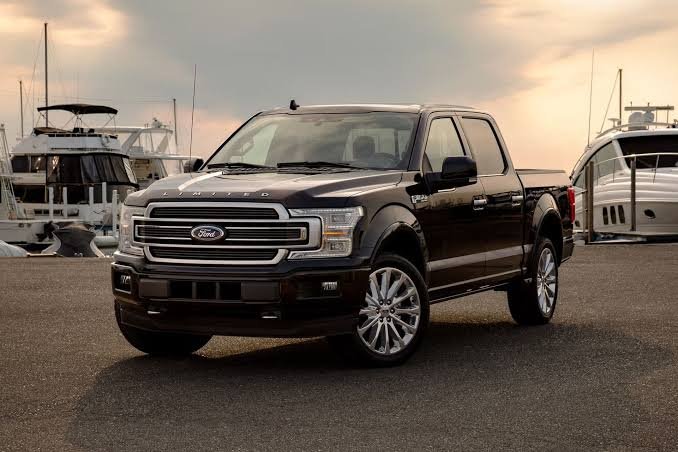
Which Ford F-150 Trucks Are Involved?
The verified Michigan litigation concerns model-year 2018–2020 Ford F-150 trucks equipped with the 5.0-liter V8 engine, commonly called the Coyote. It should not be described as a lawsuit covering every F-150 engine or every model year.
David Lyman and other owners brought the action on January 6, 2021, in the U.S. District Court for the Eastern District of Michigan. Its case number is 2:21-cv-10024. The complaint was subsequently amended as the litigation developed.
The model and engine description identifies the vehicles at issue. It does not establish that every matching truck has experienced excessive oil consumption or that every owner qualifies for a payment.
What Do Owners Allege Is Wrong With the Engine?
The owners’ theory centers on the piston-ring assembly and cylinder coating. They allege that problems with these components allow oil to enter the combustion chamber and burn during engine operation. As a result, they say the trucks require unusually frequent oil checks and additional oil between scheduled services.
The alleged consequences extend beyond the cost of buying oil. Plaintiffs describe premature engine wear, damage to combustion and exhaust components, and reduced vehicle value. Their lawyers also argue that inadequate lubrication can create a risk of stalling or engine failure.
These are disputed claims. A complaint about consumption does not, by itself, establish the mechanical cause in an individual truck. The litigation must connect the alleged defect to the losses for which the plaintiffs seek recovery.
What Ford’s Service Bulletin Actually Says
Ford’s own service documentation confirms that excessive consumption was a recognized service concern for some trucks. Technical Service Bulletin 19-2365, dated December 5, 2019, addresses 2018–2020 F-150 vehicles with the 5.0-liter engine consuming more than approximately one quart of oil in 3,000 miles without visible leaks.
The bulletin identifies high intake-manifold vacuum during certain deceleration events as a possible cause of oil entering the combustion chamber. Its prescribed procedure includes reprogramming the powertrain control module, fitting a revised oil-level indicator, and replacing the oil and filter.
That document matters because it provides manufacturer-issued evidence of a service issue. It does not establish every allegation in the lawsuit. The owners challenge whether Ford’s measures corrected the underlying problem; Ford’s bulletin presents them as a repair procedure.
How the Court Proceedings Developed
The case has survived several rounds of litigation, but some claims and plaintiffs have followed different paths.
In March 2022, the court dismissed certain claims, including the implied-warranty claims then before it, while allowing other theories to proceed. On that complaint, the court found that the plaintiffs had not alleged their trucks were incapable of providing transportation. That was a ruling on particular legal claims, rather than a finding that excessive consumption could never cause harm.
In March 2023, the court ordered certain plaintiffs’ claims into arbitration and granted a partial dismissal motion. Those decisions did not end the entire lawsuit. They help explain why older reports describing dismissed claims can coexist with later reports of continuing litigation.
What the July 2026 Ruling Decided
On July 22, 2026, Judge Gershwin A. Drain granted Ford’s summary-judgment motion in part and denied it in part. Fourteen numbered counts were resolved in Ford’s favor; other claims survived.
A central issue was Ford’s knowledge before the purchases. The court examined internal development records and communications concerning oil consumption, piston-ring changes and fuel-economy targets. Viewing the evidence under the standard applicable to Ford’s motion, it found that a reasonable jury could conclude Ford knew about the alleged defect before the named plaintiffs acquired their trucks.
That finding allowed disputed issues to proceed. It was not a jury verdict that Ford committed fraud, nor a determination that all owners suffered the same loss.
Is There a Verified Settlement or Payout?
Research for this article on October 14, 2026, did not establish an approved class settlement, a payment schedule or an official claims deadline. Plaintiffs’ counsel continues to list Lyman as a current case and highlights the July 2026 ruling.
The latest substantive merits ruling independently verified for this article is the July 22 order. The available public material should not be represented as a complete docket through October. In particular, no payout amount should be inferred from the fact that claims survived summary judgment.
Frequently Asked Questions
Q. Does a replacement dipstick prove that Ford concealed a defect?
No. The revised dipstick is documented in Ford’s service bulletin, while claims that the change masked consumption come from the plaintiffs. Establishing concealment requires evidence about what Ford knew, what it disclosed and the legal requirements of the particular claim. The replacement part alone does not settle those questions.
Q. Is the service bulletin a recall that guarantees a free engine?
No. Bulletin 19-2365 supplies a diagnostic and repair procedure; it does not announce a blanket engine-replacement program. It expressly makes warranty eligibility subject to coverage limits and verification. A truck matching the bulletin’s model description is not automatically entitled to a free engine.
Q. Did owners sent to arbitration lose their cases?
An order compelling arbitration does not itself decide whether an owner’s defect allegations are true. It directs covered disputes into a different forum under the applicable agreement. The March 2023 order should therefore not be reported as a verdict rejecting every affected owner’s complaint.