 By Patricia Jones
 Front windshield tint is generally illegal except for a nonreflective strip along the top of the windshield that extends no more than six inches downward from the top. Illinois does not normally allow a driver to tint the entire front windshield simply because the film is light or allows a high percentage of visible light through. A separate medical exemption is available for people who satisfy specific statutory requirements.
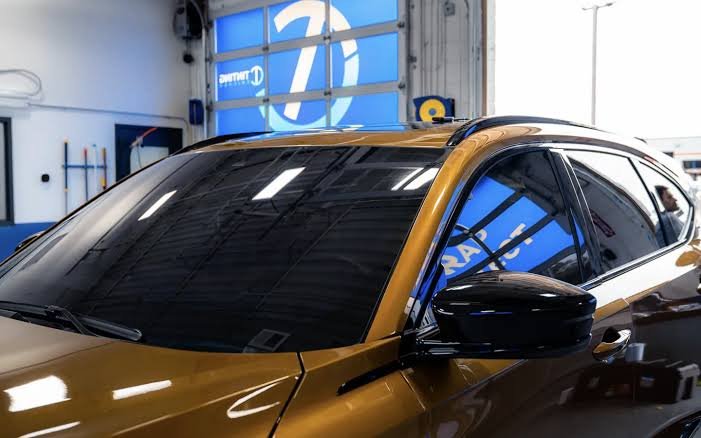
What Does Illinois Law Say About Front Windshield Tint?
The controlling provision is 625 ILCS 5/12-503 of the Illinois Vehicle Code.
The law states that a person may not drive a motor vehicle with tinted film, reflective material, nonreflective material, a window application, sign, or poster on the front windshield.
Illinois creates one ordinary tint exception: nonreflective tinted film may be placed along the uppermost portion of the windshield as long as it does not extend more than six inches down from the top.
This means Illinois does not use a normal visible-light-transmission percentage, such as 70% VLT, to authorize full-windshield aftermarket tint. Outside an applicable exemption, the basic rule is that the windshield must remain untinted below the permitted six-inch upper strip.
How Much of the Front Windshield Can Be Tinted?
For an ordinary vehicle without a medical exemption, Illinois allows tint only on the upper six inches of the windshield.
The film must also be nonreflective.
This differs from the rules in some states that allow windshield tint down to the manufacturer’s AS-1 line. Illinois’s statute specifies a six-inch measurement from the top rather than relying on the AS-1 marking.
Tint extending farther down the windshield can therefore violate Illinois law even when the driver’s visibility still seems reasonably clear.
Is 70% Windshield Tint Legal in Illinois?
Generally, no.
A common misunderstanding is that a very light film, such as 70%, 80%, or 90% VLT tint, is automatically legal because it does not significantly darken the windshield.
Illinois’s windshield provision is not written that way. It prohibits tinted film and other window treatment on the front windshield except for the permitted nonreflective upper strip.
Therefore, a full-windshield 70% tint does not automatically become legal merely because it transmits most visible light.
Are the Front Side Windows Subject to the Same Rule?
No. Illinois applies different rules to the windows immediately beside the driver.
Depending on how the rear windows of the vehicle are treated, qualifying nonreflective tint on the front side windows may generally allow either at least 50% light transmission or 35% light transmission, with a 5% enforcement variance in the circumstances specified by law.
For example, where the rear windows do not transmit less than 35% of light, Illinois permits qualifying front side-window tint with at least 35% light transmission. Other configurations may require at least 50%.
These percentages should not be confused with the front-windshield rule. The windshield itself generally remains limited to the six-inch top strip.
Is There a Medical Exemption for Windshield Tint?
Yes. Illinois provides an important medical exemption from the ordinary windshield and side-window restrictions.
The exemption can apply when the vehicle owner or a qualifying person transported in the vehicle has a medical condition requiring protection from direct sunlight.
Illinois specifically gives examples including:
- Systemic or discoid lupus erythematosus
- Disseminated superficial actinic porokeratosis
- Light sensitivity resulting from traumatic brain injury
- Albinism
The affected person must satisfy the statutory certification requirements, and the vehicle must receive the appropriate distinctive license plate or license-plate sticker.
How Do You Get an Illinois Medical Tint Exemption?
The vehicle owner must obtain a certified statement or letter from a physician licensed to practice medicine in Illinois confirming the qualifying condition.
The certification must be carried in the vehicle and submitted to the Illinois Secretary of State. It must contain information including the physician’s details and the condition requiring the exemption.
The medical certification must be renewed by the physician every four years.
The Illinois Secretary of State currently provides a Tinted Window Certification form and issues distinctive tinted-window license plates for qualifying vehicles.
Simply having a doctor’s note without following the required Secretary of State process should not be assumed to authorize otherwise prohibited tint.
What Is the Penalty for Illegal Windshield Tint in Illinois?
A first violation of the applicable tint provisions is a petty offense.
Illinois law provides for a fine of at least $50 and no more than $500. A second or subsequent violation is treated as a Class C misdemeanor, with a fine of at least $100 and no more than $500.
A person convicted of unlawful windshield or window tinting can also be ordered to modify the vehicle so that the windows comply with Illinois law.
Illinois also prohibits installers from knowingly installing material that violates the windshield-tint restrictions.
Frequently Asked Questions
Q1. Is clear UV-blocking film legal on the entire windshield in Illinois?
Not automatically. Section 12-503 covers not only dark tinted film but also window applications and nonreflective material. Therefore, describing a film as “clear,” “ceramic,” or “UV blocking” does not by itself make a full-windshield application lawful.
Q2. Does factory-tinted glass allow me to add windshield tint?
Factory privacy glass on rear windows can affect which tint level is permitted on the front side windows, but it does not create a general exemption allowing aftermarket tint over the entire front windshield.
Q3. Do Illinois windshield-tint rules apply to an out-of-state vehicle?
Section 12-503 contains an exception for motor vehicles properly registered in another jurisdiction from several of its tint provisions. An out-of-state driver should still comply with the laws applicable to the vehicle’s registration and should not assume that other Illinois safety or obstruction rules are irrelevant.
Q4. Can a tint shop legally install darker windshield tint if I have a medical exemption?
Yes, but the statutory requirements must already be satisfied. Illinois requires an installer performing medical-exemption tint work to obtain the required medical documentation, and the vehicle must have the distinctive license plate or sticker required for the exemption.