 By Patricia Jones
 A Dallas County jury has returned a $604.025 million verdict against freight broker C.H. Robinson, trucking company Lupus Superior and truck driver Gorgonio Gonzalez over a deadly 2021 highway crash.
The collision killed Jennifer Lipe, Benjamin Brewer and Rhoderick Coleman and seriously injured Rodney Hawkins and Gabrielle Broussard. Their families and the surviving victims argued that the crash could have been prevented if the companies had acted on safety warnings and stopped the driver from continuing the delivery.
C.H. Robinson strongly disagrees with the verdict and plans to appeal. The company has also clarified that the jury’s decision remains advisory until the judge completes post-trial proceedings and enters a final judgment.
How the Deadly Crash Happened
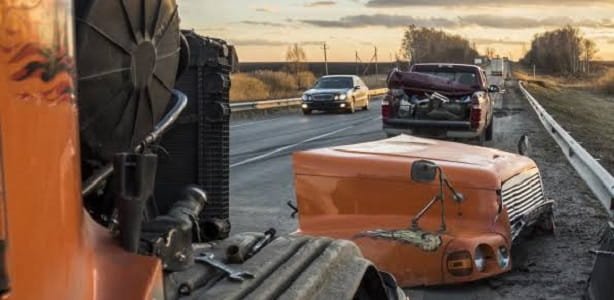
The crash occurred on March 25, 2021, on Interstate 20 in Warren County, Mississippi.
Traffic had stopped on the highway when an 18-wheeler operated by Gonzalez crashed into the vehicles ahead. The impact caused a fiery six-vehicle pileup involving two commercial trucks and four passenger vehicles.
Lipe, Brewer and Coleman became trapped and died in the fire. Hawkins and Broussard survived but suffered serious injuries.
Although the lawsuit was connected to a Mississippi crash, the case was tried in Dallas County Court at Law No. 4 in Texas. It is known as Lipe v. Lupus Superior, LLC, et al.
Why C.H. Robinson Was Included in the Lawsuit
C.H. Robinson did not own the truck or directly employ Gonzalez. It was the freight broker that arranged for Lupus Superior to transport a shipment of beverages from Florida to Texas.
Freight brokers connect businesses needing goods transported with trucking companies capable of completing the delivery. The plaintiffs argued that this role gave C.H. Robinson a duty to select a reasonably safe carrier.
According to the families’ lawyers, federal safety information had flagged Lupus Superior for unsafe-driving and hours-of-service concerns for more than a year before the collision.
The plaintiffs alleged that C.H. Robinson either knew or should have known about those warning signs but continued assigning shipments to the carrier.
Claims About the Driver’s Condition
Evidence presented by the plaintiffs reportedly showed that Gonzalez drove away from the planned route during the night and falsified information in his driving logs.
The plaintiffs also said Gonzalez informed Lupus Superior and C.H. Robinson that he was sick and could not continue driving safely.
Their lawyers argued that the delivery should have been postponed or reassigned. Instead, Gonzalez continued operating the truck before crashing into the stopped traffic.
These claims became central to the argument that the collision was not simply an unpredictable driving accident. The plaintiffs maintained that decisions made by the trucking company and freight broker helped create the conditions that led to it.
How the Jury Assigned Responsibility
The jury found Gonzalez, Lupus Superior and C.H. Robinson negligent.
It assigned:
- 45% of the responsibility to Gonzalez
- 32% to Lupus Superior
- 23% to C.H. Robinson
The jury also determined that Gonzalez acted as a borrowed employee of C.H. Robinson during the delivery. Based on that finding, the freight broker could potentially be held responsible for both its own 23% share and the driver’s 45% share.
That would make C.H. Robinson responsible for as much as 68% of the verdict. However, the final legal responsibility and recoverable amount remain subject to post-trial decisions and an expected appeal.
How C.H. Robinson Responded
C.H. Robinson says it did not negligently select Lupus Superior.
The company maintains that the carrier had successfully completed nearly 270 shipments for its customers before the crash. It also says Lupus Superior held a “Satisfactory” safety rating from the Federal Motor Carrier Safety Administration when it was selected.
C.H. Robinson further argues that Lupus Superior was an independent motor carrier and that Gonzalez worked for the trucking company, not for the freight broker.
In a regulatory filing, C.H. Robinson described the $604 million decision as an advisory verdict. It said the court must still consider post-trial proceedings before entering any final judgment.
The company expects to appeal if the verdict becomes final.
Why a Supreme Court Ruling Matters
The verdict came shortly after an important US Supreme Court decision involving C.H. Robinson.
In May 2026, the Supreme Court ruled in Montgomery v. Caribe Transport II that federal transportation law does not automatically block state-law claims accusing a freight broker of negligently hiring an unsafe trucking company.
The ruling did not decide the Dallas crash case. However, it confirmed that freight brokers cannot always avoid negligent-selection lawsuits by arguing that federal trucking law overrides such claims.
Is the $604 Million Already Payable?
No. The case has produced a jury verdict, not a completed settlement or final payment.
The trial judge must still address post-trial motions and determine whether to enter the verdict as a final judgment. The amount could be reduced, changed or overturned during later proceedings.
C.H. Robinson has already indicated that it will appeal. The appeals process could continue for years before the final financial responsibility is known.
For now, the verdict represents a major decision against the trucking and freight-brokerage defendants. It also sends a broader warning that brokers may face substantial liability when juries conclude they failed to examine carrier safety information or respond to signs that a driver could not safely complete a delivery.